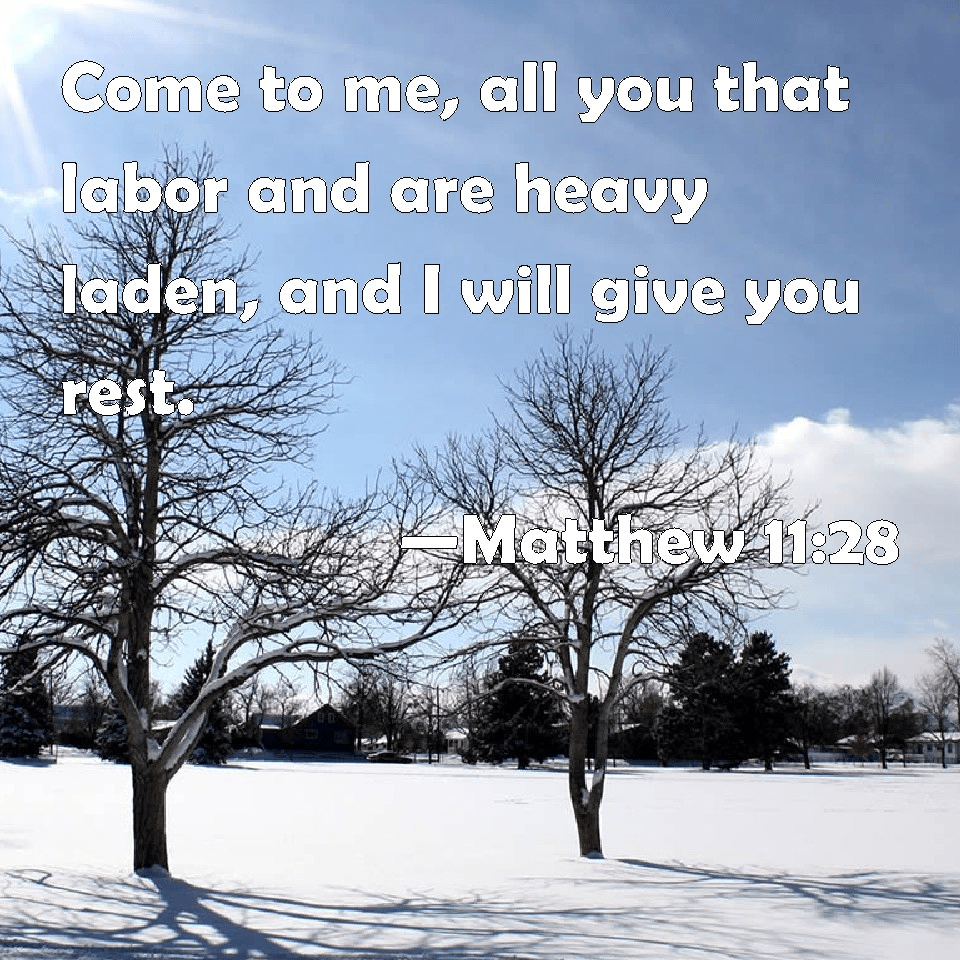
28 Come to Me, all you who labor and are heavy laden, and I will give you rest. 29 Take My yoke upon you and learn from Me, for I am [f]gentle and lowly in heart, and you will find rest for your souls. 30 For My yoke is easy and My burden is light(Matt. 11:28-30, NKJ).”
Many Christian churches differ in their practices and interpretations of Bible principles, drawing upon the Old Testament and the Gospel of Jesus Christ. These variations result in a spectrum of contrasts, from significant differences to close associations, leaving many believers feeling confused and questioning their faith. It is essential to recognize that the divinity of the Holy Ghost, the inspiration bestowed upon Moses, and the ministry of Jesus compel individuals to seek the truth. This pursuit strengthens their belief and faith as they strive for the eternal rewards that await them. Across the globe, various Christian denominations present an array of Bible interpretations, each asserting its own accuracy. This reality creates a true/false dichotomy within the understanding of faith that must be addressed.
WHERE IT ALL BEGAN
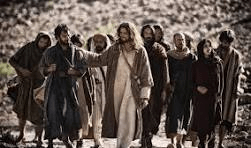
Although Jesus established a single, unified movement centered on the Kingdom of God, the emergence of various religious groups largely stemmed from developments that occurred after His ministry. These developments included the separation of church and state, political influence, and differing interpretations of Scripture.
AFTER THE APOSTLES COME AND GONE
Theologically, many Christians believe that although there is one “body of Christ,” various traditions and denominations emerged over time, having differences in worship style, personality, and cultural expressions. Some interpretations suggest that the original united church established by Jesus became fragmented after the apostles’ passing. This led to a “falling away” and the subsequent rise of religious sects that did not fully adhere to the original teachings of Christ and the Apostles.
SHIP WRECKED, AND FOLLOWERS DEPART
34 But when the Pharisees heard that Jesus silenced the Sadducees, they gathered together. 35 Then one of them, a lawyer, asked Him a question, testing Him, and saying, 36 “Teacher, which is the great commandment in the law?” 37 Jesus said to him, “‘You shall love the Lord your God with all your heart, with all your soul, and with all your mind.’ 38 This is the first and great commandment. 39 And the second is like it: ‘You shall love your neighbor as yourself.’ 40 On these two commandments hang all the Law and the Prophets.” (Mat.22: 34-40, NKJ).
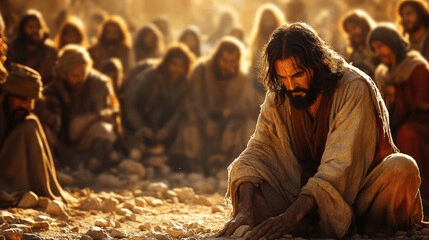
During the 16th-century Reformation, reformers broke away from the Roman Catholic Church, leading to further divisions over biblical interpretations. Differences in church and religious structure resulted in the formation of thousands of denominations. Some separations can be attributed to human sin, such as pride, the desire for power, and the pursuit of financial gain. Consequently, the core message from Jesus—the “great commandment” to love God and love your neighbor—emphasizes doctrines from which followers drifted away, straying from Christ’s ultimate teachings. Some scholars and religious groups argue that true Christian faith is based on Scripture, while many organizations corrupted authentic worship.
Interpretations have separated millions since the 16th century. These disputes never challenged the Word of God, but rather stem from misunderstandings and uncertainties among Christian scribes, ministries, and scholars. A possibility that many sought justification or self-satisfaction for a life that strays from Gospel principles. Or, have people find certain Scriptural messages too harsh or not harsh enough? Perhaps letting go of one’s leisure or pleasure proved to be a difficult challenge.
THE BIRTH OF CHRISTIANITY
Throughout these sacred texts, a palpable rivalry emerged between Jesus’ revolutionary ministry and the entrenched powers of the Pharisees and Sadducees, who were instrumental in their roles leading to his arrest and crucifixion at the hands of the Roman authorities.
The councils of Hippo (393 A.D.) and Carthage (397 A.D.) affirmed the sacred canon amidst evolving doctrine. The Church recognized texts with self-authenticating authority based on key criteria: Apostolicity (authorship by an apostle or close associate), Orthodoxy (alignment with Christian doctrine), and Catholicity (universal acceptance).
Formatting Christianity is one aspect, but the existence of denominations is unavoidable. Even during both the early and final stages of Jesus’ ministry, there were challenges posed by religious leaders and the public’s disbelief. There were simply too many influences at play, all trying to shape the teachings of the Apostles and the first Disciples of Christ. Their missionary journeys throughout the Middle East inspired evangelistic teachings and conversions through baptisms, primarily focusing on the “Gospel and Good News of Jesus Christ.”
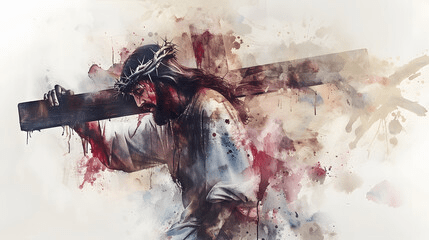
The spread of the Gospel continues into the 21st century, with millions of Christians around the world following the teachings of Jesus Christ across various denominations. Ultimately, the purpose of Christ’s message and ministry, through His udying atonement from the cross, is to offer a path for forgiveness and repentance—a way back to Heavenly Father. The diversity of denominations represents humanity’s treasure hunt in search of truth and a connection with God, Amen.
 Welcom Viewers
Leave a comment